
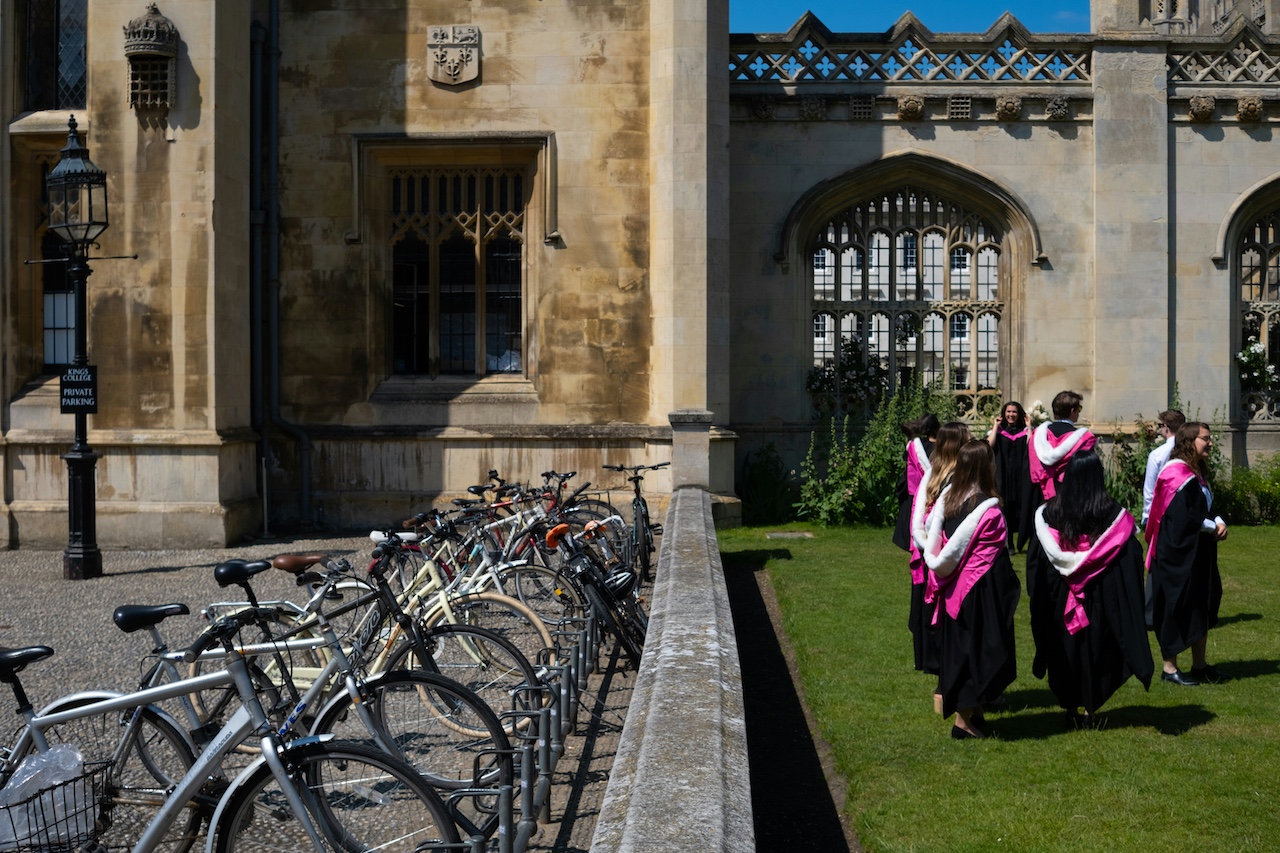
Recruiting overseas students in a tougher market: How to reach high-value international students
Discover how long-form content, distributed across premium international publications, helps UK universities reach the right overseas audiences and influence one of the biggest decisions they'll ever make.


Choosing to study a postgraduate degree abroad is one of the most significant decisions a person can make. It means committing tens of thousands of pounds, often a year or more away from home, and a bet on future career prospects, all for an experience they cannot try before they buy.
For UK universities, that decision is becoming harder to win. For the marketers that plan their international campaigns, it means reaching the right people, in the right markets, with content that gives them reasons to choose.
A market that rewards precision
The numbers show a sector under pressure. In the year ending June 2026, there were 383,455 sponsored study visa grants, 11% fewer than the previous year and 41% below the peak in the year ending June 2023 according to the Home Office.
Postgraduate study sits at the heart of this. The majority of international students (62%) come to the UK to study for a master's, yet master's-level visa grants have fallen by 25% from their peak. British Council analysis of HESA data shows international postgraduate taught enrolments fell by 12.7% in 2024/25.
The picture also differs sharply between markets. China and India remain the two largest sources of sponsored study visas, accounting for 24% and 23% of main applicants respectively, while visa issuances to students from Nepal and Bangladesh rose by 60% and 71% in 2025.
In a market like this, broad-brush awareness is expensive and inefficient. Universities need to find the audiences most likely to apply, enrol and succeed, and speak to them in a way that reflects their priorities.
Policy changes raise the stakes
Several changes will shape how prospective students weigh up the UK. From 1 January 2027, the Graduate route for bachelor's and master's graduates will reduce from two years to 18 months, with PhD graduates still eligible for three years (Home Office, Immigration Rules Appendix Graduate).
From August 2028, higher education providers in England will also pay an international student levy of £925 per international student per year (HM Treasury and Department for Education).
At the same time, the government's International Education Strategy sets an ambition to grow UK education exports from £32 billion to £40 billion a year by 2030 (Department for Education).
The UK still has a powerful offer. But universities now have to work harder to explain it, and to make sure every recruitment pound reaches people who are genuinely in the market.
A considered decision needs considered content
Prospective international students are not making snap judgements. QS research shows that half are considering five or more universities, 58% say high-quality teaching is an important factor when choosing a country, and 59% perceive the UK as expensive (QS).
That combination of choice, ambition and cost sensitivity is exactly where long-form content performs best. An article has the space to answer the questions that really drive a decision:
• What will this degree do for my career? Graduate outcomes, industry links and alumni stories that show where the course leads.
• Is it worth the investment? A clear case for value, from teaching quality and course structure to scholarships and post-study opportunities.
• What is it like to live and study here? The city, the campus, the community and the support available to international students.
• How does the process work? Applications, entry requirements, visas and key dates, explained clearly.
A well-crafted feature on a specialist master's programme, built around the experience of a graduate now working in their chosen field, does something a banner never can. It helps the reader picture their own future.
Premium environments lend credibility
Where that story appears matters as much as what it says. For a decision this significant, prospective students and the people who support them look for sources they trust.
The Reuters Institute's 2026 Digital News Report found that trust in news on social media sits at just 22%, compared with 37% for news overall, and that trust in the most widely used individual news brands is holding up better than trust in news in general (Reuters Institute).
High-end international news, business and lifestyle publications give universities a credible, brand-safe environment in which to tell their story. They also reach the wider circle of influence around a student.
Parents and family members often play a major role, particularly where they fund their child's studies: QS found that 43% of prospective international students globally expect their parents or family to be their main source of funding, rising to 81% among Chinese students (QS).
Appearing alongside respected journalism helps reinforce the prestige that a top UK institution represents, to the student and to the people helping them decide.
Reaching the right audience overseas
Premium placement only works if it reaches the right people. At Effective Media, we target suitable overseas audiences by market, interest, career stage and publication, focusing campaigns on the profiles most likely to pursue postgraduate and high-value degrees.
That might mean early-career professionals in finance and technology for a specialist master's, graduates in key growth markets for research programmes, or affluent families in established markets for flagship courses. The aim is to put the right story in front of the right reader, in a setting that reflects the quality of the institution.
We run campaigns for the UK’s leading institutions, so we understand both the ambition of these brands and the expectations of the audiences they want to reach.
From reading to applying
Every piece of content should lead to a relevant next step: a course page, a virtual open day, a scholarship guide or a conversation with the admissions team. The landing page should continue the story, rather than start it again.
Timing matters too. Content should reach students while they are still researching and comparing options, well ahead of application deadlines for September and January intakes, and be refreshed as policy and course details change.
Measurement should reflect the full journey. Dwell time and scroll depth show whether the story is landing. Onward clicks, enquiries and applications show whether it is driving action. Testing headlines, markets and placements helps identify which audiences and messages deliver the best return.
In short
International postgraduate recruitment is more competitive than it has been in years. The universities that stand out will be those that reach the right people in the right markets, and give them the depth and reassurance they need to commit. Long-form content in premium international environments does exactly that.
Planning your next international recruitment campaign? Speak to Effective Media about reaching high-value overseas audiences with content that helps them choose your institution.
Like the article? Spread the word
Next articles


Interstitial or direct? Why editorial can beat sending traffic direct to your site
Most brands still buy media as though every audience is ready to convert. But while a direct path to a landing page can work for users with existing intent, cold, interrupt-driven audiences require a different journey. The best-performing native campaigns recognise this, earning attention and building trust before asking users to take action.


